Linux
Practical Linux — shell, processes, networking, and performance.
 01
01Linux (1): Basics — Core Concepts and Essential Commands
Your entry guide to Linux: the multi-user permission model, the FHS directory tree, distribution lineages, and the …
 02
02Linux (2): File Permissions — rwx, chmod, chown, and Beyond
Master the Linux permission model: rwx semantics on files vs directories, numeric and symbolic notation, chmod/chown …
 03
03Linux (3): Disk Management — Partitions, Filesystems, LVM, and the Mount Stack
End-to-end disk workflow on Linux: identify block devices with lsblk, partition with GPT, format with ext4 / xfs, mount …
 04
04Linux (4): Package Management — apt, dnf, pacman, and Building from Source
Master package management across distributions: dpkg/apt for Debian/Ubuntu, rpm/yum/dnf for RHEL/CentOS, pacman for …
 05
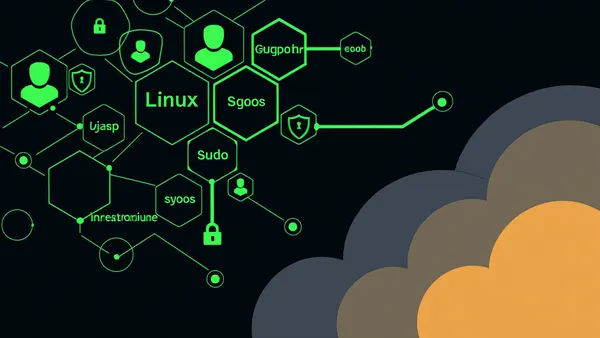
05Linux (5): User Management — Users, Groups, sudo, and Security
A working mental model for Linux accounts: how /etc/passwd and /etc/shadow fit together, when to use a primary group …
 06
06Linux (6): Service Management — systemd, systemctl, and journald
A working model of systemd: PID 1, units and targets, the service lifecycle, writing your own unit files, journalctl …
 07
07Linux (7): Process and Resource Management: From `top` to cgroups
How processes are born and die on Linux: the fork/exec model, the state machine that ps and top print in the STAT …
 08
08Linux (8): Pipelines and File Operations — Composing Tools into Data Flows
A deep walk-through of the Unix pipeline model: stdin/stdout/stderr and file descriptors, every common redirection form, …
 09
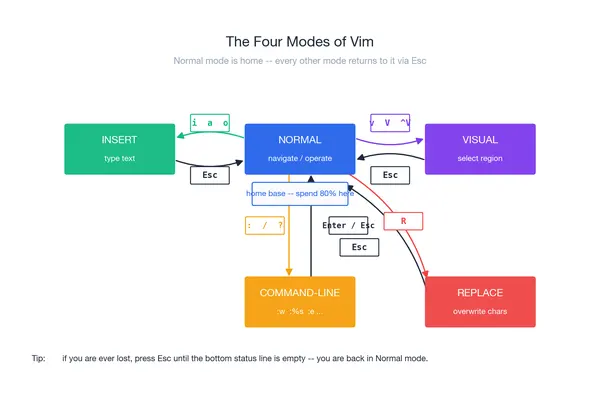
09Linux (9): Vim Essentials
Learn Vim by understanding its grammar -- modes, operators + motions, text objects -- not by memorizing shortcuts. A …